Pilot Plant Lessons from Nutrient Hydrolysate Producers Serving Precision Fermentation
Precision fermentation has created a sharper standard for nutrient hydrolysates. Media inputs are no longer judged only by general digestibility or label claims. Buyers are asking how consistently a hydrolysate supports organism growth, production phase behavior, downstream handling, and repeatable batch release.
For a fermentation ingredient manufacturer, that makes enzyme selection a commercial decision as much as a process decision. The right enzyme supplier for fermentation media production must understand substrate variation, hydrolysis control, filtration behavior, documentation needs, and the way media performance is evaluated by precision fermentation customers.
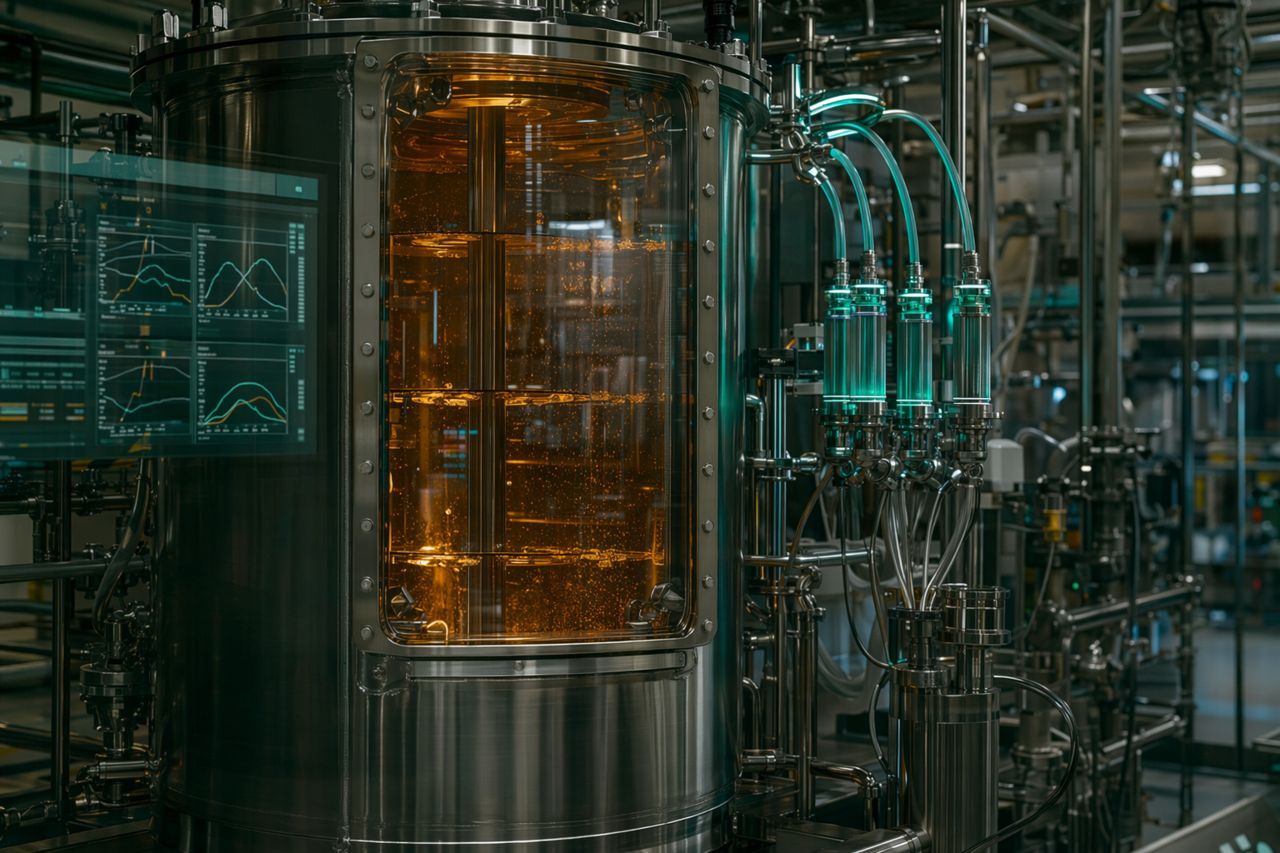
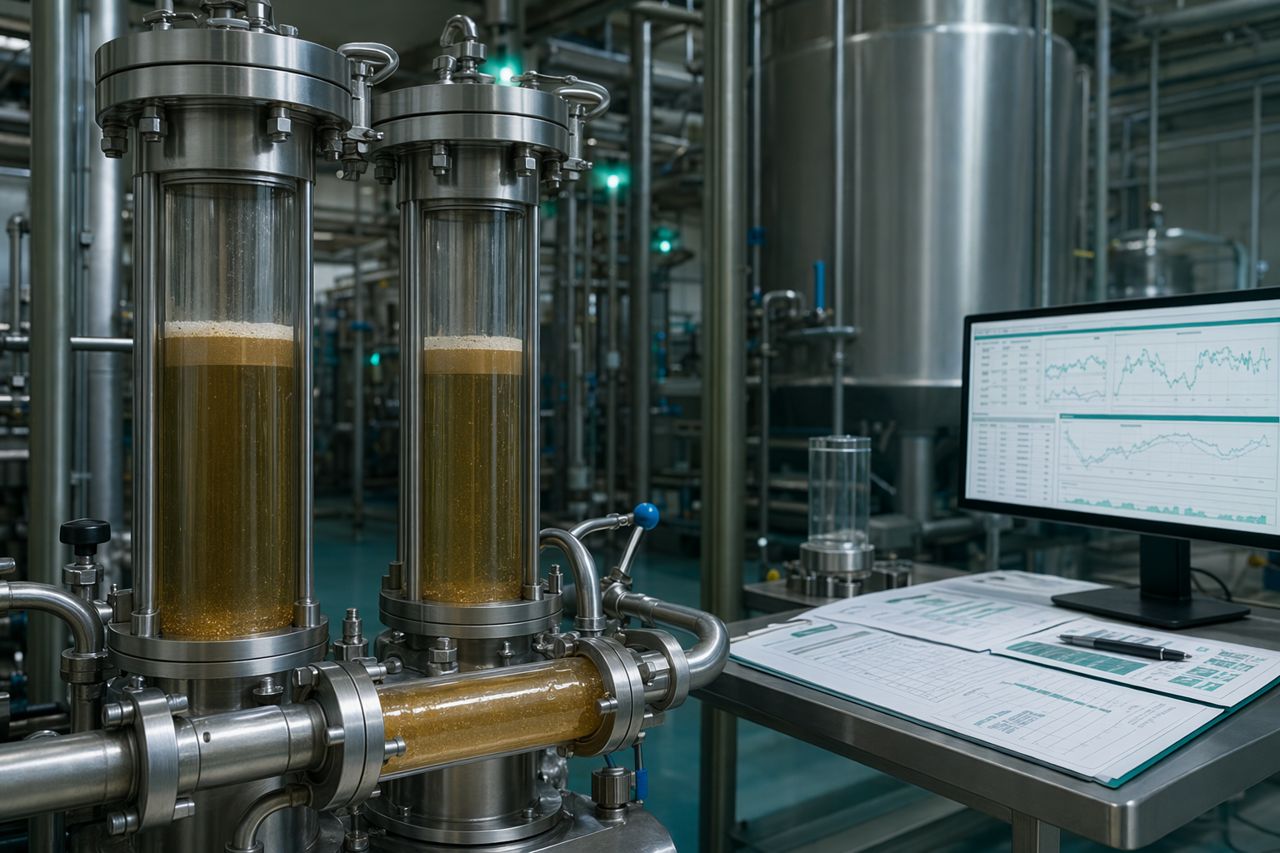
Pilot plants are where these requirements become visible. At bench scale, a hydrolysate may look acceptable. At pilot scale, mixing limitations, heat transfer, solids handling, hold time, and feed timing expose whether the process is truly transferable.
Why pilot scale changes the conversation
Hydrolysate production for precision fermentation sits between agricultural raw material variability and bioprocess customer expectations. Raw materials can shift by season, origin, extraction history, storage condition, and pretreatment. Precision fermentation customers, meanwhile, expect media ingredients that behave predictably in tightly controlled production runs.
Pilot scale is the bridge. It shows whether an enzyme-driven process can deliver the same nutrient profile when the substrate charge is larger, the vessel geometry changes, and the reaction is managed under plant-realistic constraints.
Key pilot questions include:
- Does the enzyme system open the substrate enough without over-processing it?
- Can hydrolysis be stopped at a defined process endpoint?
- Does viscosity stay within the plant’s mixing and transfer limits?
- Are insolubles reduced enough to support separation and filtration?
- Does the resulting hydrolysate support consistent fermentation growth and production behavior?
- Can the process be documented in a way that supports customer qualification?
Lesson 1: Substrate fit matters more than enzyme novelty
A nutrient hydrolysate producer may work with soy, yeast, pea, grain, corn-derived streams, oilseed meals, microbial biomass, or blended protein-carbohydrate substrates. Each raw material presents a different structure, antinutritional burden, solubility profile, and processing history.
Enzyme choice should start with the substrate, not with a generic catalog position. A protease system that performs well on one protein matrix may create poor solubility, excess bitterness, or difficult filtration on another. A carbohydrate-focused enzyme package may increase fermentable sugars but leave a peptide profile that does not meet customer expectations.
At pilot scale, substrate fit is evaluated through practical outcomes:
- Soluble nutrient release
- Peptide and amino nitrogen consistency
- Fermentable carbohydrate availability
- Manageable viscosity during reaction and transfer
- Reduced insoluble load
- Compatibility with thermal treatment, separation, concentration, and drying
Enzymegen supports this work by helping manufacturers connect enzyme selection to raw material behavior and target media functionality.
Lesson 2: Hydrolysis control is the core scale-up skill
Precision fermentation customers do not want a hydrolysate that is merely more broken down. They want a hydrolysate that is broken down in a controlled, repeatable way.
That distinction is important. Over-hydrolysis can shift the nutrient balance, increase unwanted small fragments, alter taste or odor attributes, and change how the ingredient behaves in filtration or fermentation. Under-hydrolysis can leave nutrients unavailable and increase insoluble burden.
Control depends on a defined process window:
- Substrate preparation and solids loading
- Enzyme addition sequence
- Mixing intensity and distribution
- Temperature profile
- Reaction hold strategy
- Endpoint decision rules
- Enzyme inactivation or downstream stabilization
- Separation and finishing conditions
The pilot plant should not simply prove that hydrolysis occurs. It should define how hydrolysis will be controlled when the commercial line is under production pressure.
Lesson 3: Media consistency is a customer-facing specification
Precision fermentation buyers often evaluate hydrolysates through fermentation performance, not just a certificate of analysis. A supplier may pass basic compositional checks and still fail in customer trials if the ingredient creates growth lag, foaming, feed instability, oxygen demand shifts, or batch-to-batch variability.
For nutrient hydrolysate producers, consistency should be built into both process design and release logic. That means aligning enzyme treatment with the media attributes customers actually monitor:
- Growth phase support
- Production phase feed behavior
- Titer curve shape
- Yield stability
- Reproducible nutrient uptake
- Low insoluble carryover
- Predictable sterilization behavior
- Reduced media-related troubleshooting
The commercial value is straightforward: a hydrolysate that performs consistently is easier for precision fermentation customers to qualify, scale, and keep in their approved media platform.
Lesson 4: Filtration and downstream handling deserve early attention
Many hydrolysis projects focus heavily on nutrient release and only later confront separation. Pilot plants repeatedly show that filtration behavior can determine whether a formulation is commercially practical.
Enzyme treatment can improve separation by reducing insoluble structure, but it can also create fine particulates or viscosity conditions that slow clarification. The optimal enzyme approach must therefore consider both nutrient profile and plant throughput.
Practical pilot observations should include:
- Slurry behavior during reaction
- Settling and centrifugation response
- Filter loading tendency
- Clarity after separation
- Concentration behavior
- Drying or liquid stabilization compatibility
- Clean-in-place implications
A hydrolysate that looks strong in fermentation screening but creates bottlenecks in finishing may not be a scalable product. Enzymegen approaches enzyme selection with the full manufacturing route in view.
Lesson 5: Documentation accelerates customer qualification
Precision fermentation customers are under pressure to qualify inputs with clear change control, traceability, and performance rationale. Enzyme-assisted hydrolysate producers can support that process by documenting how the manufacturing method is controlled.
Useful documentation may include:
- Substrate range and acceptance criteria
- Enzyme system rationale
- Process flow and control points
- Target hydrolysis window
- Inactivation or stabilization approach
- Lot-to-lot release parameters
- Allergen, animal-origin, or regulatory positioning where relevant
- Change notification expectations
- Scale-up summary from pilot to commercial equipment
This is where a technical enzyme supplier can create value beyond product shipment. The buyer needs confidence that the hydrolysate can be produced repeatedly and defended during customer review.
Lesson 6: Feed compatibility should be tested before launch
Many precision fermentation processes use staged nutrient addition, fed-batch strategy, or media adjustments during production. A nutrient hydrolysate may be used in basal media, feed media, or both. Each use case stresses the ingredient differently.
Pilot plant qualification should consider whether the hydrolysate remains stable and practical under likely use conditions:
- Concentrated liquid feed handling
- Sterile filtration or heat treatment compatibility
- Interaction with salts, trace nutrients, and carbon sources
- Foaming tendency
- Color and odor impact
- Storage stability in the intended format
- Performance across customer-relevant organisms or platform strains
For manufacturers selling into precision fermentation, this creates an opportunity. A hydrolysate positioned around feed compatibility and documented process control can be more valuable than a generic nutrient ingredient.
What process development managers should ask an enzyme supplier
When qualifying an enzyme partner for hydrolysate manufacturing, the discussion should move quickly from general capability to plant-specific fit.
Ask:
- Which substrate characteristics drive enzyme selection for this material?
- How will the enzyme system affect soluble nutrient release and insoluble load?
- What process variables most strongly influence endpoint consistency?
- How should we manage scale-up from pilot vessel to production equipment?
- What downstream effects should we expect in separation, concentration, or drying?
- How can the enzyme process be documented for customer qualification?
- What support is available if raw material variation changes hydrolysate behavior?
A credible answer should connect enzyme function to manufacturing control and customer media performance. It should not rely on broad claims or isolated lab observations.
Where Enzymegen fits
Enzymegen works with fermentation ingredient manufacturers developing enzyme-assisted hydrolysates for precision fermentation media. Our role is to help technical and commercial teams connect enzyme selection with substrate fit, process control, scale-up readiness, and customer-facing documentation.
Typical support areas include:
- Enzyme system selection for plant-based, yeast-based, microbial, and blended substrates
- Hydrolysis process window development
- Pilot-to-production scale-up support
- Nutrient profile and media performance alignment
- Troubleshooting for viscosity, insolubles, filtration, and batch variability
- Documentation support for B2B ingredient qualification
The objective is practical: help producers manufacture nutrient-rich hydrolysates that are easier to run, easier to qualify, and more consistent in fermentation use.
Watch the 1-minute explainer
The embedded explainer below summarizes how controlled enzymatic hydrolysis supports precision fermentation media consistency, from substrate preparation through customer qualification. It uses faceless industrial visuals, voiceover, and on-screen subtitles for quick technical review.
Request a quote
If your team is developing or qualifying nutrient hydrolysates for precision fermentation customers, Enzymegen can review your substrate, process constraints, and target media profile.
Request a quote through the on-site form and tell us what you need to produce, control, or improve.